Researchers Develop Recyclable Electronics That Can Heal Themselves
- Feb 16
- 1 min read
Updated: Jun 23
Student summary by Elizabeth Li
Original Source: Alex Parrish, Virginia, June 2nd, 2025
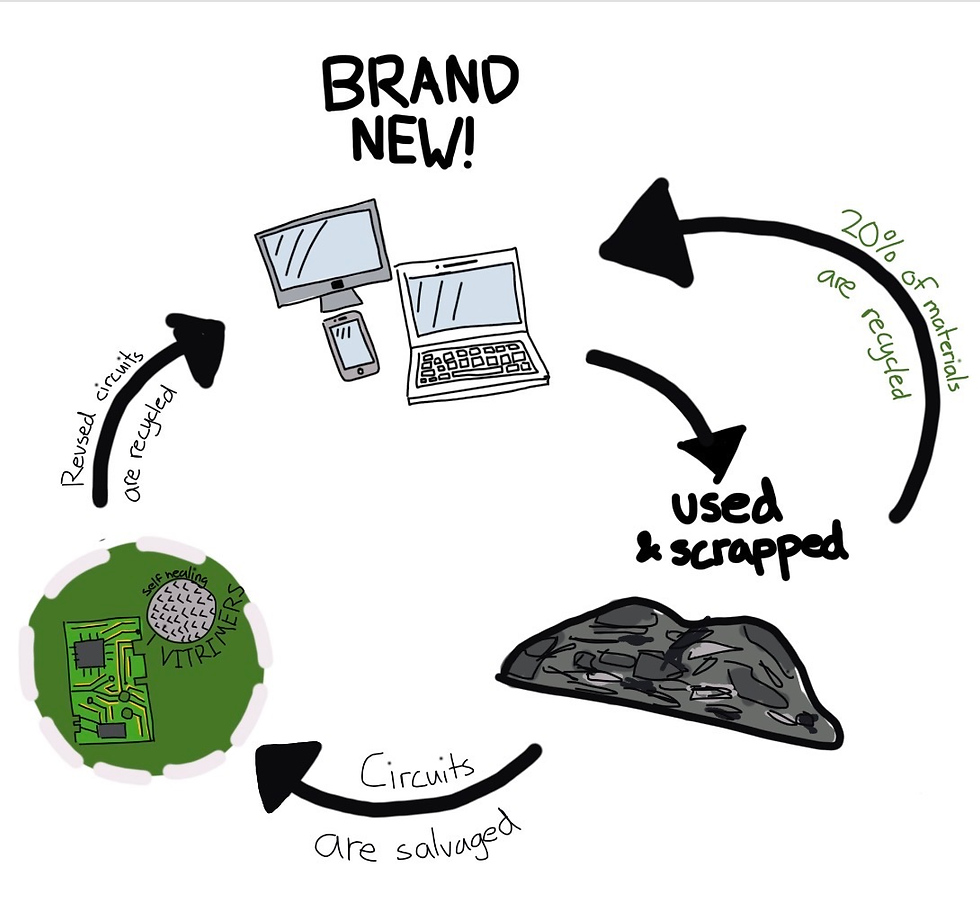
Image created by Elizabeth Li
Abstract
Background:
So many electronics such as phones, tablets, and computers have been thrown away in the past few years, and the recycling process is proving to be too slow to accommodate so much waste. The amount of electronic waste (e-waste) is piling up, and only about 20% of it can be recycled. Adding to the problem, this number is predicted to remain the same, even as the total amount grows.
Objective:
Michael Bartlett, a mechanical engineering associate professor, and Josh Worch, an assistant professor of chemistry, wanted to develop a type of material to help solve this problem.
Method:
They used a special type of plastic called vitrimer, blended with tiny liquid metal droplets, to create circuits that could self-repair, be recycled, and change shape, while staying as strong and conductive as traditional circuit boards.
Results:
When recycled, the material breaks down to recover key parts like liquid metal and LEDs — unlike traditional circuit boards, which lose those same valuable materials. A result of these adjustments was that circuit boards made from the material worked even when damaged or deformed. These recyclable, self-healing circuits could transform how electronics are built and discarded.
Conclusion:
This breakthrough offers a way to design sustainable technology that lasts longer and creates less waste.