Gray Wolves are Hunting Sea Otters and No One Knows How
- 16 hours ago
- 2 min read
Student Summary by Audrey Kim
Original Source: Anna Gray, The University of Rhode Island — ScienceDaily, January 30, 2026

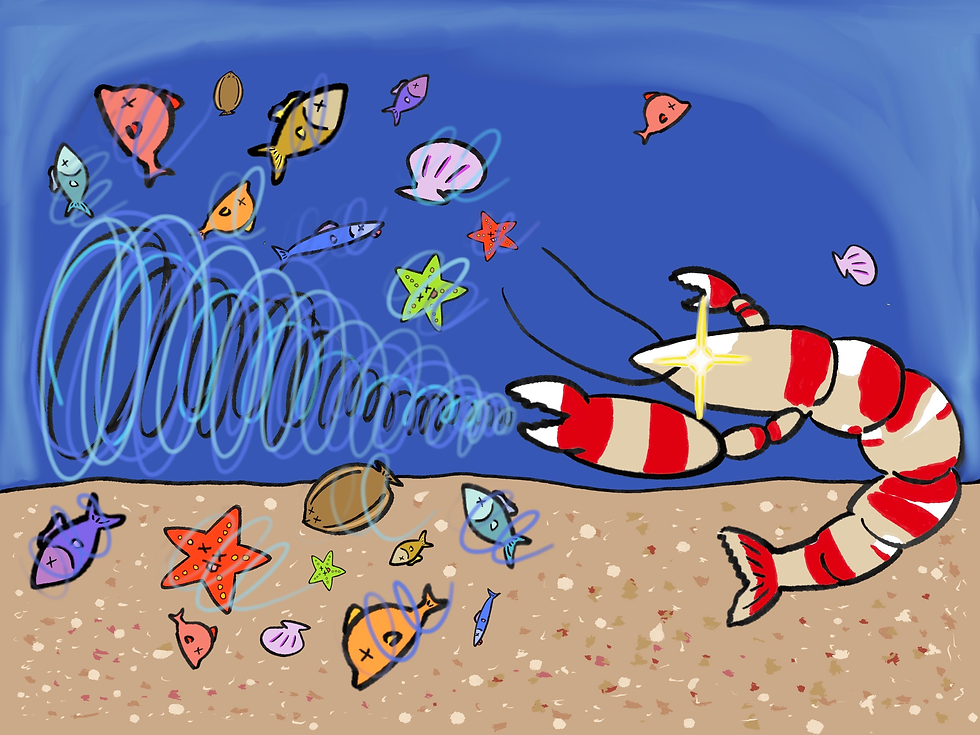
Image created by Audrey Kim
Abstract
Background: The Alaskan gray wolves, living on Prince of Wales Island, were showing unusual behaviours; they started hunting sea otters. Sea otters were not included in their usual meal. This unexpected shift of diet could have had wide-ranging effects on coastal ecosystems and also on the wolves themselves.
Objective: Scientists still know very little about how these wolves adapted to marine hunting. However, before the otters' population was reduced by fur trading, this might have been an old tradition the wolves already had. Scientists researched to find out what it means for land–sea ecosystems, and whether this relationship is coming back as sea otters recover.
Method: To investigate these questions, researchers analyzed gray wolf teeth from museum collections and recently deceased animals using stable-isotope techniques. Wolves' teeth have layers on them like tree rings. By analyzing them, scientists can individually sample each of these growth rings to track an individual's feeding patterns over time. To also investigate how the wolves hunted otters, trail cameras were newly added on the island. A team of seven URI students had been trained to help review more than 250,000 images of wolves and sea otters.
Results: This research is still going, so there are no final results yet. Data collection continues, and the study is expected to span several more years. Bailey also plans to return to Prince of Wales Island next summer to continue the fieldwork.
Conclusion: Researchers face many challenges in studying wolves because they are difficult to track, intelligent, and live in remote areas. The project has relied heavily on the local experts, whose knowledge of the island has been essential. Researchers are also concerned that wolves eating sea otters may be exposed to high levels of toxic methylmercury, which could affect their health. This research will continue several more years, and will expand eastward to compare the skulls of coastal and inland wolves, using specimens from eastern Canada.